Sterile Medical Packaging Equipment: From Product to Sealed Pack
Medical products that require sterile protection need packaging systems capable of maintaining package integrity throughout processing, storage, transportation, and use.
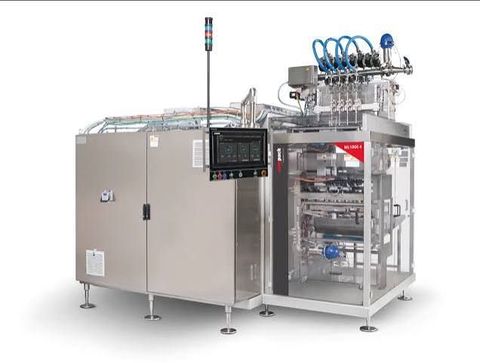
Sterile Medical Packaging Equipment combines forming, sealing, inspection, material handling, and quality-control technologies to create controlled sterile barrier packages.
Depending on the product, packaging format, material, and production volume, manufacturers may use medical pouch machines, tray sealing systems, thermoforming equipment, form-fill-seal systems, and automated inspection technologies. Each stage contributes to producing a consistent package that protects the medical device until the package is opened for use.
Why Sterile Medical Packaging Equipment Matters
Medical packaging has requirements that differ from conventional consumer packaging. The package may need to protect a device from contamination, moisture, physical damage, and environmental exposure while also supporting sterilization and controlled opening.
Sterile Medical Packaging Equipment helps manufacturers produce repeatable packaging processes by controlling important parameters such as temperature, pressure, sealing time, material positioning, and package dimensions.
Important functions include:
- Medical pouch forming
- Tray forming and sealing
- Heat sealing
- Packaging material handling
- Sterile barrier creation
- Seal inspection
- Vision inspection
- Label application
- Package integrity testing
- Automated product handling
The appropriate equipment depends on the characteristics of the medical product and the required packaging configuration.
From Medical Product to Sealed Package
The packaging process generally involves several controlled stages. The exact sequence varies according to the product, packaging material, and sterilization method.
1. Product Preparation
Before packaging, medical devices or other healthcare products are prepared according to established production procedures.
Products may be cleaned, dried, inspected, assembled, or arranged in a specific orientation before entering the packaging line.
Automated feeding and handling systems can position products consistently and reduce unnecessary manual handling.
2. Packaging Material Preparation
Packaging materials may include medical-grade films, coated papers, rigid trays, lids, pouches, and thermoformable materials.
Material handling equipment feeds the packaging substrate into the production system while maintaining appropriate alignment and tension.
3. Forming
Thermoforming equipment can shape flexible or semi-rigid materials into cavities designed to hold medical products.
The forming process must provide consistent dimensions so that products fit correctly within the package without excessive movement.
4. Product Loading
Products are placed into pouches, trays, or formed cavities.
Depending on production volume and product geometry, loading can be manual, semi-automated, or fully automated.
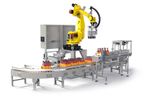
Robotic handling systems may be integrated into high-throughput packaging lines for repetitive product placement.
5. Sealing
Sealing creates the barrier between the medical product and the external environment.
Heat sealing is widely used for suitable medical packaging materials. Equipment controls parameters such as:
- Sealing temperature
- Pressure
- Dwell time
- Material alignment
- Seal width
- Equipment speed
Consistent control of these parameters is important for producing repeatable seals.
6. Inspection
After sealing, packages can undergo visual and automated inspection.
Inspection technologies can identify issues such as incorrect positioning, damaged packaging, incomplete seals, wrinkles, contamination, or other defined defects.
Vision systems can inspect package characteristics at production speed and provide automated process feedback.
7. Labeling and Identification
Medical packages may require labels containing information such as product identification, batch information, manufacturing data, expiration information, or other required details.
Automated labeling systems can apply labels consistently while integrated vision systems can verify their presence and positioning.
8. Final Handling
Finished packages are transferred to subsequent processing, sterilization, storage, or distribution stages according to the validated manufacturing process.
Automated conveyors and handling equipment can reduce unnecessary movement while maintaining consistent package orientation.
Major Types of Sterile Medical Packaging Equipment
Different equipment types address different packaging formats and production requirements.
| Equipment Type | Main Function | Typical Packaging Format |
|---|---|---|
| Medical pouch packaging machines | Form and seal pouches | Flexible pouches |
| Tray sealing machines | Seal medical trays | Rigid trays |
| Thermoforming machines | Form package cavities | Blister-style and tray formats |
| Form-fill-seal systems | Form and seal packages | Flexible packaging |
| Heat sealers | Create package seals | Pouches and lids |
| Automated loading systems | Position products | Trays and pouches |
| Vision inspection systems | Inspect packages | Multiple formats |
| Leak testing equipment | Evaluate package integrity | Sealed packages |
| Labeling machines | Apply identification | Pouches, trays, cartons |
| Packaging conveyors | Transfer products | Automated lines |
Medical Pouch Packaging Equipment
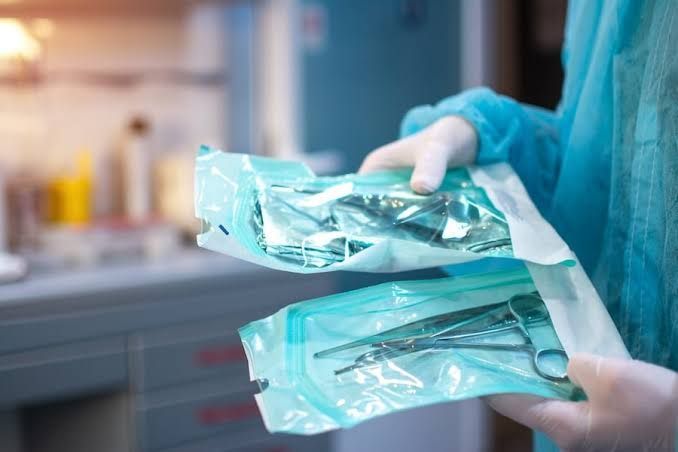
Medical pouch packaging systems are widely used for products such as surgical instruments, medical components, and other devices requiring sterile barrier protection.
A typical system may combine material feeding, product loading, sealing, cutting, printing, and inspection.
Important equipment considerations include pouch dimensions, material compatibility, seal characteristics, production speed, and inspection requirements.
Medical Tray Sealing Equipment
Tray sealing systems combine a rigid tray with a flexible lid material.
The tray holds the medical product while the lid creates the sealed barrier. Depending on the application, tray sealing equipment may incorporate automated product loading, gas management, sealing, cutting, and inspection.
Tray formats can be useful when the product requires physical support or a specific presentation inside the package.
Thermoforming Equipment
Thermoforming machines heat suitable packaging materials and form them into predefined cavities.
The process can produce customized cavities that match the geometry of medical devices. This can help limit unnecessary movement during transportation and handling.
Modern thermoforming systems may integrate:
- Material heating
- Forming stations
- Product loading
- Sealing
- Cutting
- Printing
- Vision inspection
Sealing Technology
The seal is one of the most important parts of a sterile barrier package.
Packaging equipment must maintain controlled sealing conditions throughout production. Variations in temperature, pressure, dwell time, material alignment, or contamination can affect the resulting seal.
Automated systems can monitor process parameters and generate alarms when defined limits are exceeded.
Package Inspection and Integrity Testing
Inspection helps identify potential packaging defects before products move to subsequent stages.
Vision Inspection
Camera-based systems can examine package appearance, positioning, labels, and other visible characteristics.
Seal Inspection
Seal inspection technologies evaluate defined seal characteristics and can identify potential abnormalities.
Leak Testing
Certain packaging configurations may undergo integrity testing to identify potential leaks or package defects.
The inspection method should be selected according to the packaging design, material, product, and applicable validation requirements.
Sterile Packaging Automation
Automation can connect individual packaging stages into a continuous production workflow.
Automated systems may include:
- Robotic product loading
- Automatic pouch forming
- Tray loading
- Automated sealing
- Vision inspection
- Label verification
- Data collection
- Reject handling
- Conveyorized product transfer
Automation can improve process consistency and reduce repetitive manual operations.
How to Select Sterile Medical Packaging Equipment
Choosing packaging equipment requires consideration of the entire production process.
Product Characteristics
The size, shape, weight, fragility, and orientation of the medical product influence packaging equipment selection.
Packaging Format
Manufacturers should determine whether the application requires pouches, trays, thermoformed cavities, or another packaging configuration.
Packaging Materials
Films, papers, trays, and other packaging substrates have different forming and sealing characteristics.
Production Volume
High-volume production may benefit from automated loading, continuous material feeding, integrated inspection, and automated reject systems.
Lower-volume production may prioritize flexible equipment that can accommodate multiple product formats.
Seal Requirements
The sealing system should provide consistent control of temperature, pressure, dwell time, and other relevant parameters.
Inspection Requirements
The production line should incorporate appropriate inspection technologies for the package characteristics that need to be verified.
Key Performance Factors
When evaluating Sterile Medical Packaging Equipment, manufacturers should consider several technical characteristics.
| Factor | Why It Matters |
|---|---|
| Sealing accuracy | Supports consistent package seals |
| Forming precision | Maintains cavity dimensions |
| Machine flexibility | Supports different product formats |
| Automation level | Reduces repetitive manual handling |
| Inspection capability | Helps identify defined packaging defects |
| Material compatibility | Supports appropriate packaging substrates |
| Production speed | Determines line throughput |
| Changeover capability | Helps accommodate multiple formats |
| Data monitoring | Supports process documentation |
| Equipment accessibility | Simplifies maintenance activities |
Quality and Process Control
Medical packaging processes require controlled and documented production conditions.
Manufacturers commonly establish procedures for material identification, equipment setup, sealing parameters, inspection, cleaning, maintenance, and process monitoring.
Important controls may include:
- Packaging material verification
- Seal parameter monitoring
- Equipment calibration
- Product identification
- Vision-system verification
- Package inspection
- Reject management
- Production traceability
- Preventive maintenance
Packaging processes may also require validation to demonstrate that the equipment and process consistently achieve defined requirements.
Sterile Medical Packaging Equipment Comparison
| Packaging Need | Recommended Equipment Category | Main Capability |
|---|---|---|
| Flexible pouch packaging | Medical pouch machine | Forming and sealing |
| Rigid tray packaging | Tray sealer | Tray and lid sealing |
| Custom product cavities | Thermoformer | Cavity formation |
| High-volume packaging | Automated packaging line | Integrated production |
| Package verification | Vision inspection | Visual inspection |
| Seal verification | Seal inspection system | Seal evaluation |
| Package integrity | Leak testing equipment | Integrity assessment |
| Product identification | Labeling system | Automated labeling |
Best Practices for Packaging Operations
Maintain Stable Sealing Parameters
Temperature, pressure, dwell time, and other critical parameters should remain within established process ranges.
Inspect Packaging Materials
Incoming packaging materials should be verified against established specifications before entering production.
Monitor Equipment Performance
Regular monitoring can help identify changes in sealing performance, forming accuracy, or machine operation.
Control Product Positioning
Consistent product placement can improve package appearance and reduce the risk of interference with sealing areas.
Maintain Equipment Properly
Scheduled inspection, cleaning, calibration, and preventive maintenance can support reliable packaging operations.
Frequently Asked Questions
What is Sterile Medical Packaging Equipment?
Sterile Medical Packaging Equipment includes machinery used to form, load, seal, inspect, label, and handle packages designed to provide controlled protection for medical products.
What equipment is used for medical pouch packaging?
Medical pouch packaging may use pouch forming machines, heat sealers, cutting systems, product loading equipment, printing systems, and inspection technologies.
What is the purpose of a medical tray sealing machine?
A medical tray sealing machine seals a flexible lid material to a rigid tray containing a medical product, creating a controlled package barrier.
Why is sealing important in medical packaging?
Sealing helps create the package barrier and must be controlled consistently to meet defined packaging requirements. Seal quality can influence package integrity during subsequent handling and storage.
How is medical packaging equipment selected?
Selection depends on product characteristics, packaging format, material compatibility, production volume, sealing requirements, automation needs, inspection requirements, and applicable quality procedures.
Conclusion
Sterile Medical Packaging Equipment provides the machinery required to transform medical products and packaging materials into controlled, sealed packages. The process can involve material feeding, forming, product loading, sealing, inspection, labeling, and final handling.
Pouch packaging machines, tray sealers, thermoforming systems, automated loading equipment, inspection systems, and package integrity testing technologies can be combined according to the application.
As medical packaging operations become more automated, manufacturers are increasingly integrating robotic handling, machine vision, process monitoring, automated inspection, and digital production records. Selecting equipment around the complete packaging workflow can help manufacturers maintain consistent processes while supporting the specific requirements of medical products.