Graphene Production Equipment: From Carbon Feedstock to Graphene
Graphene is a two-dimensional carbon material known for its distinctive electrical, thermal, mechanical, and surface properties.
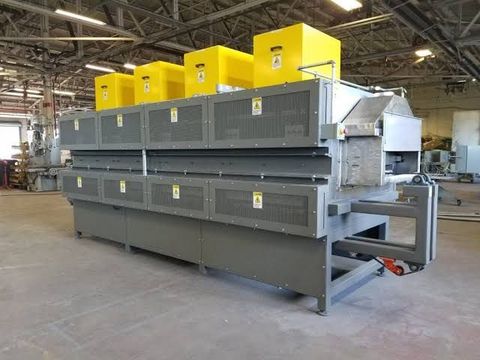
Producing graphene at different scales requires carefully controlled processes that can transform graphite or other carbon-based feedstocks into graphene or graphene-based materials. Graphene Production Equipment provides the reactors, exfoliation systems, separation units, drying equipment, and processing technologies needed for these operations.
The appropriate equipment depends on the desired graphene type, production method, material quality, particle characteristics, production capacity, and intended application. Laboratory systems can be relatively compact, while industrial production lines may integrate multiple processing stages into a continuous or semi-continuous workflow.
What Is Graphene Production Equipment?
Graphene Production Equipment refers to machinery and process systems used to synthesize, exfoliate, separate, purify, dry, and process graphene materials.
A complete production line may include:
- Feedstock preparation systems
- Grinding and milling equipment
- Exfoliation systems
- Chemical reactors
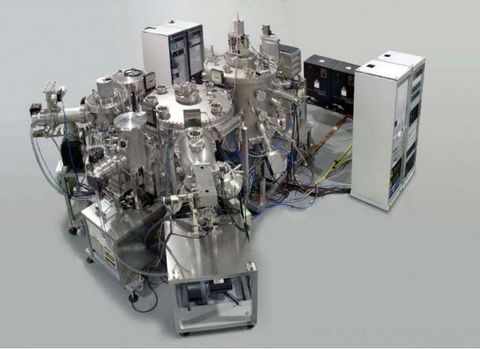
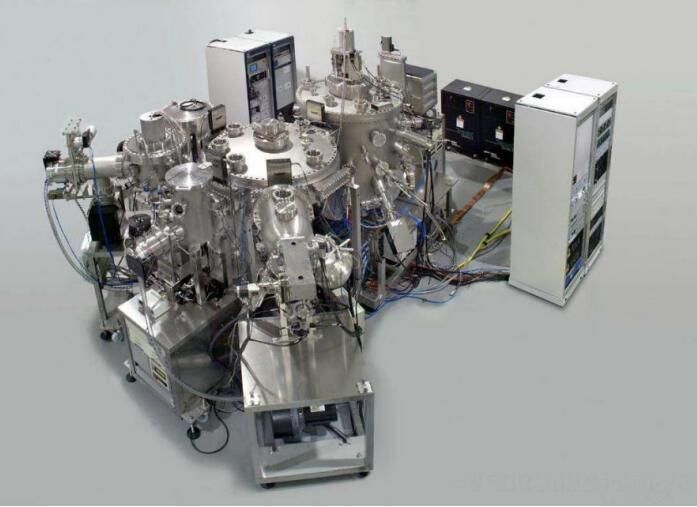
- Chemical vapor deposition systems
- Separation equipment
- Centrifuges
- Filtration systems
- Washing equipment
- Drying systems
- Powder collection equipment
- Process-control systems
Different production methods require different equipment configurations. Mechanical exfoliation, liquid-phase exfoliation, chemical synthesis, and chemical vapor deposition each have distinct processing requirements.
From Carbon Feedstock to Graphene
Graphene production generally involves several stages. The exact sequence depends on the selected synthesis technology.
1. Carbon Feedstock Preparation
Graphite is a common starting material for several graphene production methods.
The feedstock may require sizing, purification, drying, or other preparation before entering the primary production stage.
Preparation equipment can include:
- Crushers
- Mills
- Sieves
- Dryers
- Feed hoppers
- Material handling systems
Consistent feedstock characteristics can help improve downstream process control.
2. Feedstock Dosing
Prepared material is introduced into the production system at a controlled rate.
Automated feeders, pumps, or metering systems can regulate the amount of material entering an exfoliation or reaction process.
Consistent feed rates are particularly important in continuous production systems.
3. Graphene Synthesis or Exfoliation
The primary graphene-forming process depends on the selected technology.
Mechanical and liquid-phase exfoliation methods separate graphite layers using physical forces. Chemical methods modify graphite or carbon precursors through controlled reactions.
CVD systems use gaseous carbon-containing precursors to form graphene layers on a suitable substrate.
4. Separation
After synthesis or exfoliation, the process mixture may contain graphene, unprocessed feedstock, solvents, catalysts, or other materials.
Separation equipment can include:
- Centrifuges
- Filters
- Membrane systems
- Settling systems
- Hydrocyclones
- Magnetic or other specialized separation technologies
The selected separation method depends on particle size, concentration, liquid composition, and target product characteristics.
5. Washing and Purification
Some production routes require washing or purification to remove residual chemicals, catalysts, salts, solvents, or other unwanted components.
Multiple washing stages may be used when higher material purity is required.
Process conditions must be controlled to prevent unnecessary material loss or changes in graphene structure.
6. Drying
After wet processing, graphene materials may contain significant amounts of liquid.
Drying equipment removes moisture or solvent while attempting to preserve the desired material characteristics.
Possible technologies include:
- Vacuum dryers
- Tray dryers
- Freeze dryers
- Spray dryers
- Fluidized-bed dryers
The appropriate technology depends on whether the graphene is produced as powder, flakes, dispersion, or another form.
7. Classification and Final Processing
The dried material may undergo additional classification, milling, blending, or deagglomeration.
These operations can help produce a more consistent particle distribution for downstream applications.
8. Packaging and Storage
The finished graphene material is transferred into suitable containers or integrated into subsequent formulation processes.
Storage conditions depend on material characteristics, moisture sensitivity, particle size, and intended application.
Major Types of Graphene Production Equipment
Different production methods require specialized equipment.
| Equipment Type | Main Function | Typical Production Method |
|---|---|---|
| Exfoliation systems | Separate graphite layers | Mechanical or liquid exfoliation |
| High-shear mixers | Apply intense mixing forces | Liquid-phase processing |
| Ultrasonic systems | Assist layer separation | Liquid exfoliation |
| Chemical reactors | Controlled chemical synthesis | Chemical routes |
| CVD systems | Deposit graphene layers | Chemical vapor deposition |
| Centrifuges | Separate particles | Wet processing |
| Filtration systems | Recover graphene | Liquid processing |
| Washing systems | Remove residual materials | Purification |
| Drying systems | Remove liquid | Wet graphene processing |
| Classification equipment | Control particle distribution | Final processing |
Mechanical Exfoliation Equipment
Mechanical exfoliation separates graphite layers using physical forces.
Industrial systems may use high-shear mixing, milling, grinding, or other mechanical approaches to reduce the thickness of graphite structures.
The challenge is balancing production throughput with control over graphene layer characteristics.
Excessive mechanical energy can affect flake dimensions, while insufficient energy may result in incomplete exfoliation.
Liquid-Phase Exfoliation Equipment
Liquid-phase exfoliation disperses graphite in a liquid medium and applies mechanical energy to separate the layers.
Equipment can include:
- Ultrasonic systems
- High-shear mixers
- Rotor-stator mixers
- High-pressure homogenizers
- Specialized milling systems
After exfoliation, separation and purification stages are typically required to isolate the desired graphene fraction.
Chemical Vapor Deposition Equipment
Chemical vapor deposition, commonly known as CVD, is used to produce graphene films on suitable substrates.
A CVD system may include:
- Reaction chamber
- Substrate holder
- Heating system
- Gas delivery system
- Flow controllers
- Vacuum equipment
- Pressure-control system
- Process monitoring equipment
Controlled temperature, pressure, gas composition, and flow conditions influence the resulting graphene film.
CVD is particularly relevant when graphene films or coatings are required rather than bulk graphene powder.
Chemical Synthesis Equipment
Chemical production routes can involve reactors, mixing systems, temperature-control equipment, filtration units, washing systems, and drying equipment.
The reactor design depends on the chemistry involved and may require controlled temperature, pressure, agitation, or gas handling.
Chemical synthesis routes can produce graphene-related materials with properties different from mechanically or physically exfoliated graphene.
Separation and Purification Systems
Separation is important because graphene production streams may contain a mixture of different particle sizes, unprocessed graphite, reaction by-products, and processing chemicals.
Centrifugation
Centrifuges use centrifugal forces to separate particles according to their settling characteristics.
Filtration
Filtration systems can recover graphene from liquid dispersions.
Membrane Separation
Membrane systems can provide selective separation of particles or dissolved materials depending on membrane characteristics.
The selected method should correspond to the desired graphene concentration and purity.
Drying Equipment for Graphene
Drying can strongly influence the physical properties of graphene powders.
Vacuum Drying
Vacuum drying can reduce drying temperatures and may be useful for materials sensitive to heat or oxidation.
Freeze Drying
Freeze drying can help produce porous structures and may be useful for selected graphene dispersions and specialized materials.
Spray Drying
Spray drying converts a liquid dispersion into dry particles through atomization and controlled evaporation.
Fluidized-Bed Drying
Fluidized-bed systems use controlled airflow to suspend and dry particles.
The drying method should be selected according to the target morphology, moisture specification, throughput, and downstream application.
How to Select Graphene Production Equipment
Equipment selection depends heavily on the desired graphene product.
Desired Product Type
First determine whether the target is:
- Graphene powder
- Graphene flakes
- Graphene dispersion
- Graphene film
- Graphene coating
- Graphene oxide
- Reduced graphene oxide
- Graphene-based composite material
Each product type can require a different production route.
Layer Characteristics
The number of graphene layers can influence material properties and application suitability.
Production equipment should therefore support the required level of exfoliation and classification.
Purity Requirements
Higher-purity applications may require additional purification and separation stages.
Production Capacity
Laboratory, pilot, and industrial systems have different equipment requirements.
Capacity should be evaluated across the entire production line rather than only the primary reactor or exfoliation unit.
Energy Consumption
Mechanical exfoliation, ultrasonic processing, heating, drying, and other operations can require significant energy.
Energy requirements should be evaluated when designing a complete production process.
Graphene Production Equipment Comparison
| Production Method | Main Equipment | Product Form |
|---|---|---|
| Mechanical exfoliation | Milling/exfoliation systems | Flakes or powder |
| Liquid exfoliation | Mixers/ultrasonic systems | Graphene dispersion |
| Chemical synthesis | Reactors and separation systems | Powder or dispersion |
| CVD | Heated reaction chamber | Graphene film |
| Spray processing | Spray dryer | Powder or particles |
| Hybrid processing | Multiple integrated systems | Application-specific |
Automation and Process Control
Modern graphene production systems can incorporate automated controls to improve process consistency.
Sensors and control systems may monitor:
- Temperature
- Pressure
- Feed rate
- Gas flow
- Mixing speed
- Reaction time
- Vacuum level
- Moisture
- Equipment status
Automated dosing and process monitoring can help maintain consistent operating conditions across production cycles.
For CVD systems, precise gas-flow and temperature control are particularly important because small process changes can influence film quality.
Quality Control in Graphene Production
Graphene quality can be evaluated using multiple analytical techniques.
Important characteristics may include:
- Layer number
- Flake size
- Purity
- Surface chemistry
- Defect concentration
- Moisture content
- Carbon content
- Electrical properties
- Thermal characteristics
Analytical methods can include spectroscopy, microscopy, particle-size analysis, thermal analysis, and other laboratory techniques.
Production equipment and quality-control systems should therefore be considered together when designing a graphene manufacturing line.
Maintenance Best Practices
Inspect Exfoliation Equipment
Mechanical systems should be checked for wear, buildup, vibration, and changes in processing performance.
Maintain Reaction Chambers
CVD and chemical-processing equipment should be cleaned and inspected according to established procedures.
Check Gas Delivery Systems
CVD systems require appropriate inspection of gas lines, regulators, flow controllers, valves, and connections.
Maintain Separation Equipment
Centrifuges, filters, membranes, and related systems should be inspected to maintain consistent material recovery.
Monitor Drying Systems
Drying temperature, pressure, airflow, and equipment cleanliness should be monitored according to the selected drying process.
Frequently Asked Questions
What is Graphene Production Equipment?
Graphene Production Equipment includes machinery used to synthesize, exfoliate, separate, purify, dry, classify, and process graphene and graphene-based materials.
What equipment is used to produce graphene?
Equipment can include exfoliation systems, high-shear mixers, ultrasonic processors, chemical reactors, CVD systems, centrifuges, filtration units, dryers, and automated process-control systems.
How is graphene produced from graphite?
Graphite can be processed through mechanical or liquid-phase exfoliation to separate its layers. Additional separation, purification, drying, and classification may then be used to obtain the desired graphene material.
What is CVD graphene production?
CVD graphene production uses a controlled reaction chamber where carbon-containing gases interact with a heated substrate to form graphene layers on its surface.
How is graphene quality controlled?
Quality can be evaluated through characteristics such as layer number, flake size, purity, defect concentration, surface chemistry, moisture, and electrical or thermal properties.
Conclusion
Graphene Production Equipment connects feedstock preparation, synthesis or exfoliation, separation, purification, drying, classification, and final material handling into a controlled manufacturing process. The equipment configuration depends strongly on whether the target product is graphene powder, flakes, dispersion, film, or another graphene-based material.
Mechanical exfoliation and liquid-phase processing rely on specialized mixing and separation technologies, while CVD systems are designed for controlled graphene-film formation. Chemical synthesis routes require reactors, purification systems, and carefully controlled downstream processing.
As graphene applications continue to expand, production systems are increasingly focused on process consistency, scalable throughput, automated monitoring, material recovery, and precise control of graphene characteristics. Selecting equipment around the complete production workflow can help manufacturers develop more controlled and repeatable graphene-processing operations.