Lithium Refining Machinery: From Raw Feedstock to Battery-Grade Material
Lithium is an important raw material for modern battery technologies, but lithium-bearing materials must undergo multiple processing and purification stages before they can become refined lithium compounds.
Lithium Refining Machinery provides the equipment needed to process mineral concentrates, brines, recycled feedstocks, and other lithium-bearing materials into products such as lithium carbonate and lithium hydroxide.
The equipment used depends on the feedstock and refining route. Hard-rock lithium processing can involve crushing, grinding, concentration, roasting, leaching, filtration, and precipitation, while brine-based processes can rely more heavily on concentration, selective separation, purification, and crystallization.
What Is Lithium Refining Machinery?
Lithium Refining Machinery refers to industrial equipment used to separate lithium from unwanted minerals, salts, impurities, and other components and convert it into a more refined chemical form.
A lithium refining facility may include:
- Crushing and grinding equipment
- Ore concentration systems
- Roasting equipment
- Leaching reactors
- Solid-liquid separation equipment
- Ion-exchange systems
- Adsorption systems
- Membrane separation equipment
- Evaporation systems
- Purification reactors
- Crystallizers
- Drying systems
- Material-handling equipment
- Process-control systems
Not every refinery requires all of these technologies. The configuration depends on the source material and desired final product.
From Raw Feedstock to Refined Lithium
Lithium refining generally involves several interconnected processing stages.
1. Feedstock Preparation
The first stage prepares the lithium-bearing material for downstream processing.
For hard-rock resources, this may involve crushing and grinding ore to liberate lithium-bearing minerals from surrounding rock.
For brines, feed preparation can involve pumping, filtration, pretreatment, and removal of selected impurities.
Recycled lithium-bearing materials may require a different preparation sequence involving dismantling, size reduction, separation, and chemical processing.
2. Size Reduction
Hard-rock feedstocks may pass through crushers and grinding mills.
Common equipment can include:
- Jaw crushers
- Cone crushers
- Impact crushers
- Ball mills
- Rod mills
- Classification equipment
The objective is to produce a particle size suitable for subsequent concentration or chemical extraction.
3. Mineral Concentration
After size reduction, physical separation can concentrate lithium-bearing minerals.
Depending on the ore characteristics, processing may use dense-media separation, flotation, magnetic separation, or other mineral-processing technologies.
The resulting concentrate contains a higher proportion of lithium-bearing material than the original ore.
4. Thermal Processing
Certain hard-rock lithium routes use thermal treatment to alter the mineral structure and make lithium more accessible during subsequent chemical processing.
Rotary kilns and other thermal-processing systems can provide controlled heating.
Important operating variables include:
- Temperature
- Residence time
- Feed rate
- Atmosphere
- Heat distribution
The specific thermal process depends on the mineralogy and selected refining route.
5. Leaching
After appropriate preparation, lithium-bearing material can be contacted with a chemical reagent to transfer lithium into solution.
Leaching equipment may include:
- Agitated reactors
- Leach tanks
- Continuous reactors
- Pumps
- Heat exchangers
- Reagent-dosing systems
The selected process conditions depend on the feedstock and chemical route.
6. Solid-Liquid Separation
After leaching, the resulting slurry contains a liquid phase and residual solid material.
Separation equipment removes the solid fraction from the lithium-containing solution.
Common technologies include:
- Filter presses
- Vacuum filters
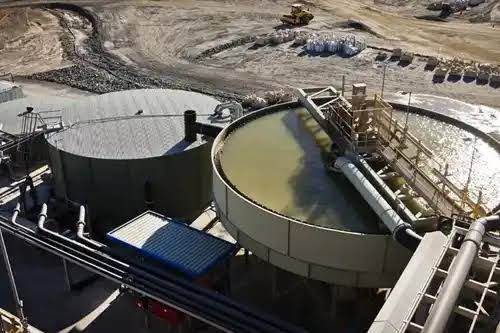
- Clarifiers
- Decanter centrifuges
- Thickening systems
Efficient solid-liquid separation can improve downstream solution quality and reduce unwanted material carryover.
7. Solution Purification
The lithium-bearing solution may contain impurities such as sodium, magnesium, calcium, iron, aluminum, or other elements.
Purification systems selectively remove these unwanted components.
Technologies may include:
- Chemical precipitation
- Ion exchange
- Solvent extraction
- Adsorption
- Membrane separation
The appropriate technology depends on impurity concentrations and the required purity of the final lithium compound.
8. Concentration
After purification, the lithium-containing solution may need to be concentrated.
Evaporation systems can remove water and increase lithium concentration before the final conversion or crystallization stage.
Other concentration technologies can also be used depending on the feedstock and process design.
9. Lithium Conversion
The purified lithium solution is converted into the desired chemical product.
Two major products used in battery-related supply chains are lithium carbonate and lithium hydroxide.
The conversion route depends on the starting solution and desired product specification.
10. Crystallization
Crystallization separates the desired lithium compound from the remaining process solution.
Crystallizer designs can include evaporative, cooling, forced-circulation, or other specialized configurations.
Crystal size, purity, yield, and morphology can be influenced by operating conditions.
11. Washing and Drying
Recovered lithium crystals may be washed to remove residual impurities before drying.
Drying equipment removes remaining moisture and produces a stable solid product.
Possible technologies include:
- Vacuum dryers
- Rotary dryers
- Fluidized-bed dryers
- Tray dryers
The appropriate technology depends on the product characteristics and required moisture specification.
12. Final Product Handling
The refined lithium compound is transferred to controlled storage and subsequent material-handling stages.
Automated conveying, weighing, sampling, and packaging systems can be integrated into the final production area.
Major Types of Lithium Refining Machinery
| Equipment Type | Primary Function | Typical Application |
|---|---|---|
| Crushers | Reduce ore size | Hard-rock processing |
| Grinding mills | Fine size reduction | Mineral liberation |
| Flotation systems | Mineral concentration | Ore processing |
| Rotary kilns | Thermal treatment | Mineral conversion |
| Leaching reactors | Dissolve lithium-bearing material | Hydrometallurgy |
| Filter presses | Solid-liquid separation | Leach processing |
| Purification reactors | Remove impurities | Lithium solution treatment |
| Evaporators | Concentrate solutions | Brine and chemical processing |
| Crystallizers | Recover lithium compounds | Product formation |
| Dryers | Remove moisture | Final product preparation |
Hard-Rock Lithium Refining Equipment
Hard-rock lithium refining typically begins with mineral processing.
The ore may pass through crushing, grinding, classification, and concentration before chemical conversion.
A simplified process can be represented as:
Ore → Crushing → Grinding → Concentration → Thermal Treatment → Leaching → Purification → Conversion → Crystallization → Drying
The actual flowsheet depends on the mineralogy and selected processing technology.
Brine-Based Lithium Processing Equipment
Brine processing follows a different pathway because lithium is already dissolved in a liquid solution.
Traditional evaporation-based processes can use ponds or engineered evaporation systems followed by chemical purification and conversion.
Newer approaches may use direct lithium extraction, where selective technologies separate lithium from brine without relying on the same long concentration pathway.
Potential equipment includes:
- Brine pumps
- Filters
- Adsorption systems
- Ion-exchange systems
- Membranes
- Desorption units
- Purification reactors
- Concentration systems
- Crystallizers
Direct Lithium Extraction Equipment
Direct lithium extraction, commonly called DLE, uses selective separation technologies to recover lithium from brines.
Depending on the technology, DLE systems may use adsorption, ion exchange, solvent extraction, membranes, or other selective processes.
A simplified DLE workflow is:
Brine → Pretreatment → Lithium Selective Separation → Desorption/Recovery → Purification → Concentration → Lithium Compound
DLE equipment must be designed around brine chemistry, flow rate, impurity profile, and the selected extraction technology.
Lithium Refining Machinery Comparison
| Feedstock | Main Processing Equipment | Typical Refining Approach |
|---|---|---|
| Hard-rock ore | Crushers, mills, flotation, kilns | Mineral concentration and hydrometallurgy |
| Lithium concentrate | Thermal and chemical systems | Conversion and purification |
| Brine | Pumps, separation, concentration systems | Brine extraction and refining |
| DLE feed | Adsorption, ion exchange, membranes | Selective lithium recovery |
| Recycled materials | Shredding, separation, leaching | Hydrometallurgical recovery |
How to Select Lithium Refining Machinery
Selecting equipment requires analysis of the entire processing route.
Feedstock Characteristics
The mineralogy, lithium concentration, impurity profile, moisture, particle size, and physical form of the feedstock influence equipment selection.
Desired Product
The refinery should be designed around the target product, such as lithium carbonate or lithium hydroxide, and its required specifications.
Processing Capacity
Equipment capacity must be coordinated across crushing, reaction, filtration, evaporation, crystallization, drying, and material handling.
A bottleneck at one stage can limit the throughput of the entire facility.
Chemical Compatibility
Reactors, tanks, pumps, pipes, filters, and other equipment must be compatible with the process chemicals and operating temperatures.
Energy Requirements
Thermal treatment, evaporation, grinding, pumping, and drying can require significant energy. Energy efficiency should therefore be considered across the complete flowsheet.
Automation and Process Control
Modern lithium refining facilities can integrate automated monitoring and control throughout the process.
Important parameters can include:
- Feed rate
- Temperature
- Pressure
- pH
- Flow rate
- Density
- Concentration
- Tank level
- Filter pressure
- Evaporation rate
- Crystallization conditions
Process-control systems can coordinate pumps, valves, reactors, heaters, separators, and other equipment.
Automated sampling and laboratory analysis can also support monitoring of lithium concentration and impurity levels.
Quality Control in Lithium Refining
The final lithium product must meet defined chemical and physical specifications for its intended application.
Quality-control programs can evaluate:
- Lithium concentration
- Moisture
- Sodium
- Magnesium
- Calcium
- Iron
- Other trace impurities
- Particle size
- Crystal characteristics
Consistent feed preparation, purification, crystallization, and drying can contribute to stable product quality.
Maintenance Best Practices
Inspect Pumps and Valves
Pumps and valves should be checked regularly for leakage, wear, pressure changes, and flow abnormalities.
Maintain Crushers and Mills
Grinding and crushing equipment should be inspected for wear and changes in particle-size performance.
Monitor Filters
Increasing pressure differential can indicate filter loading or flow restrictions.
Maintain Thermal Equipment
Kilns, evaporators, heat exchangers, and dryers require regular inspection of heating surfaces, sensors, insulation, and control systems.
Inspect Crystallizers
Crystallizer performance should be monitored for scaling, buildup, circulation problems, and changes in crystal characteristics.
Frequently Asked Questions
What is Lithium Refining Machinery?
Lithium Refining Machinery includes equipment used to process lithium-bearing ores, brines, concentrates, or recycled materials into purified lithium compounds.
What equipment is used in lithium refining?
Common equipment includes crushers, grinding mills, flotation systems, leaching reactors, filters, purification systems, evaporators, crystallizers, dryers, pumps, and automated control systems.
How is lithium extracted from hard-rock ore?
Hard-rock lithium processing can involve crushing, grinding, mineral concentration, thermal treatment, leaching, solution purification, conversion, crystallization, and drying.
What machinery is used for lithium brine processing?
Brine processing can use pumps, filters, concentration systems, adsorption or ion-exchange equipment, membranes, purification reactors, evaporators, and crystallizers depending on the selected process.
What are the main products of lithium refining?
Two major refined lithium compounds used in battery supply chains are lithium carbonate and lithium hydroxide. The appropriate product depends on downstream application and process design.
Conclusion
Lithium Refining Machinery provides the equipment needed to transform diverse lithium-bearing feedstocks into refined chemical products. The complete process can include feed preparation, mineral concentration, thermal treatment, leaching, solid-liquid separation, purification, concentration, conversion, crystallization, and drying.
Hard-rock and brine resources require different equipment configurations. Hard-rock processing generally involves mineral-processing and hydrometallurgical technologies, while brine routes can use concentration, selective separation, or direct lithium extraction technologies.
The most appropriate machinery depends on feed chemistry, production capacity, target lithium compound, impurity levels, energy requirements, and process conditions. Integrated automation and process monitoring can further support consistent operation across complex refining facilities.
As lithium demand from battery manufacturing continues to shape processing technology, refining systems are increasingly focused on improved selectivity, resource efficiency, process automation, and more controlled recovery of lithium from diverse feedstocks.