Implant Manufacturing Equipment: From Material to Finished Implant
Medical implants require highly controlled manufacturing processes because even small variations in dimensions, surface characteristics, or material properties can affect the final component.
Implant Manufacturing Equipment provides the precision machining, forming, finishing, cleaning, inspection, and surface-treatment capabilities needed to transform raw materials into implantable components.
From orthopedic implants and dental implants to specialized surgical devices, manufacturers use combinations of conventional and advanced production technologies. The equipment selected depends on implant geometry, material, required tolerances, surface characteristics, production volume, and applicable quality requirements.
Why Implant Manufacturing Equipment Matters
Medical implants often contain complex geometries and require precise dimensional control. Materials such as titanium alloys, cobalt-chromium alloys, stainless steels, ceramics, and specialized polymers can also require different processing methods.
Modern Implant Manufacturing Equipment helps manufacturers control important production variables throughout the manufacturing cycle.
Key functions include:
- Precision material removal
- Complex geometry production
- Surface finishing
- Thread and hole machining
- Surface treatment
- Cleaning and contamination control
- Dimensional inspection
- Surface-quality verification
- Process monitoring
- Production traceability
The overall objective is to consistently produce components that meet defined engineering and quality specifications.
From Raw Material to Finished Implant
The manufacturing process generally involves multiple stages. The exact sequence depends on implant type, material, design, and production method.
1. Material Preparation
Production begins with certified raw material in forms such as bars, forgings, plates, blanks, powders, or molded components.
Common implant materials include:
- Titanium and titanium alloys
- Cobalt-chromium alloys
- Stainless steel
- Ceramic materials
- High-performance polymers
- Specialized medical-grade materials
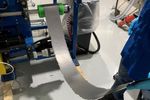
Material preparation equipment may include cutting machines, saws, forming equipment, and controlled storage systems.
2. Precision Machining
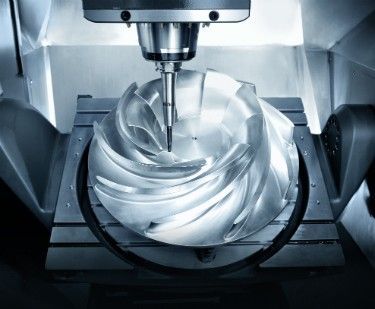
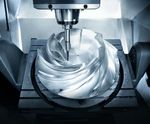
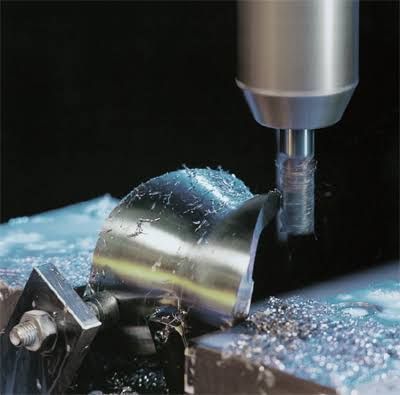
CNC machining is widely used for producing implant components with precise dimensions.
Multi-axis machining centers can manufacture complex shapes while reducing the number of setups required. Turning, milling, drilling, threading, and other operations may be combined depending on the component.
For example, orthopedic components may require highly controlled machining of curved surfaces, fixation holes, threads, and connection features.
3. Grinding and Precision Finishing
After primary machining, grinding and finishing equipment can refine dimensions and surface characteristics.
Precision grinding may be used when tighter dimensional control or specific surface conditions are required. Different abrasive technologies can be selected according to the material and geometry.
4. Polishing
Polishing equipment improves surface smoothness and appearance while removing machining marks and other surface irregularities.
Processes can include:
- Mechanical polishing
- Electropolishing
- Abrasive finishing
- Vibratory finishing
- Automated polishing
The selected method depends on the implant material and required surface specification.
5. Surface Treatment and Coating
Some implants require engineered surface characteristics to support their intended clinical application.
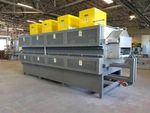
Surface-treatment technologies can include plasma-based processes, chemical treatments, thermal processes, blasting, and specialized coating methods.
For certain orthopedic applications, coatings may be applied to modify surface characteristics and support integration with surrounding bone.
6. Cleaning
Cleaning is a critical manufacturing stage because residues from machining, polishing, grinding, and handling must be controlled.
Industrial cleaning systems can use combinations of aqueous cleaning, ultrasonic cleaning, rinsing, drying, and filtration.
The cleaning process must be compatible with the implant material and the manufacturer's validated production procedures.
7. Inspection and Measurement
Inspection equipment verifies whether finished components meet specified dimensional and surface requirements.
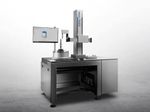
Modern inspection systems can include coordinate measuring machines, optical inspection equipment, laser measurement systems, surface measurement instruments, and other metrology technologies.
8. Final Processing and Packaging
After inspection and approved processing, implants proceed through final handling and packaging procedures appropriate to the manufacturing process.
The final stage focuses on maintaining product integrity and controlling contamination before subsequent sterilization or distribution processes.
Major Types of Implant Manufacturing Equipment
Different equipment categories perform specific manufacturing functions.
| Equipment Type | Primary Function | Typical Application |
|---|---|---|
| CNC machining centers | Precision material removal | Complex implant geometries |
| CNC turning machines | Rotational machining | Shafts, stems, cylindrical components |
| Grinding machines | Precision finishing | Dimensional and surface refinement |
| Polishing equipment | Surface finishing | Smooth implant surfaces |
| Laser processing systems | Cutting or marking | Precision features and identification |
| Additive manufacturing systems | Layer-by-layer production | Complex implant geometries |
| Coating systems | Surface modification | Functional implant surfaces |
| Cleaning systems | Residue removal | Post-machining cleaning |
| CMM systems | Dimensional inspection | Precision measurement |
| Optical inspection systems | Visual and dimensional inspection | Small and complex features |
CNC Machining for Medical Implants
CNC technology is an important part of implant manufacturing because it provides programmable control over cutting operations.
Five-axis machining can be particularly useful for complex implant geometries. Multiple axes allow cutting tools to approach curved surfaces from different orientations while reducing manual repositioning.
Important CNC considerations include:
- Machine accuracy
- Axis configuration
- Spindle performance
- Tool management
- Workholding
- Coolant management
- Automation capabilities
- Software compatibility
Tool selection is also important because implant materials can have high strength, low thermal conductivity, or abrasive characteristics that influence machining behavior.
Additive Manufacturing for Implants
Additive manufacturing has expanded the range of geometries that can be produced for certain medical applications.
Metal additive manufacturing systems can build components layer by layer from qualified metal powders. Technologies such as laser powder bed fusion can produce structures that would be difficult to manufacture using conventional machining alone.
Potential applications include:
- Porous structures
- Complex orthopedic geometries
- Customized implant designs
- Lightweight structures
- Lattice-based components
However, additive manufacturing generally requires additional processes such as support removal, heat treatment, machining, surface finishing, and inspection.
Implant Inspection Equipment
Inspection is integrated throughout the manufacturing process rather than being limited to the final stage.
Coordinate Measuring Machines
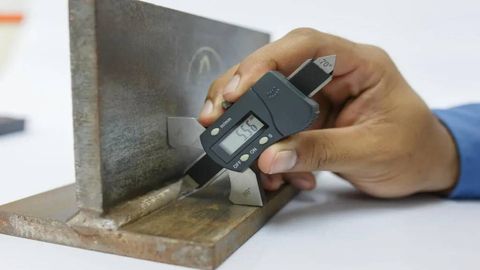
CMM systems measure dimensions and geometric relationships with high precision. They can verify features such as hole locations, diameters, angles, and complex surfaces.
Optical Inspection
Optical systems use cameras, lenses, lighting, and image-processing software to inspect small or intricate features.
Surface Measurement
Surface metrology equipment evaluates characteristics such as roughness and surface texture.
Non-Destructive Testing
Depending on implant type and manufacturing requirements, non-destructive inspection methods may be used to identify internal or surface-related defects without damaging the component.
How to Select Implant Manufacturing Equipment
Selecting production equipment requires consideration of the complete manufacturing process rather than a single machine specification.
Implant Design
Complex geometries may require multi-axis machining or additive manufacturing capabilities.
Material
Titanium, cobalt-chromium, stainless steel, ceramics, and polymers have different processing requirements.
Required Tolerances
The required dimensional tolerances influence machine accuracy, tooling, workholding, and measurement technology.
Production Volume
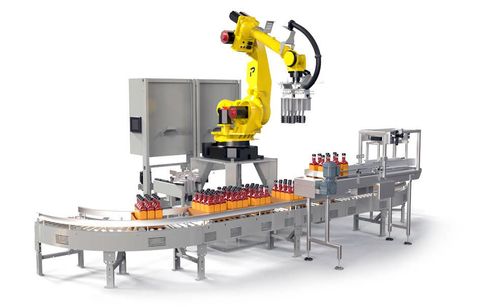
High-volume production may benefit from automated material handling, robotic loading, and integrated inspection.
Lower-volume or highly customized production may require flexible equipment capable of handling multiple implant designs.
Surface Requirements
Implants with specialized surface characteristics may require additional grinding, polishing, blasting, coating, or treatment equipment.
Inspection Requirements
Measurement capabilities should correspond to the critical dimensions and geometric characteristics defined for each implant.
Automation in Implant Manufacturing
Automation is increasingly used to improve repeatability and production monitoring.
Automated systems can support:
- Robotic machine loading
- Automated tool management
- In-process measurement
- Machine monitoring
- Automated part handling
- Digital production records
- Automated inspection
- Production data collection
Connected manufacturing systems can also provide information about machine status and process performance.
Quality and Process Control
Implant production requires controlled manufacturing processes because the final components are intended for medical applications.
Manufacturers commonly establish documented procedures for material control, machining, cleaning, inspection, process validation, equipment maintenance, and production records.
Important process-control areas include:
- Material identification
- Tool condition
- Machine calibration
- Dimensional measurement
- Surface inspection
- Cleaning validation
- Environmental controls
- Traceability
- Equipment maintenance
Applicable medical-device requirements should be evaluated according to the implant type, intended market, and manufacturing process.
Implant Manufacturing Equipment Comparison
| Manufacturing Stage | Equipment | Main Purpose |
|---|---|---|
| Material preparation | Cutting equipment | Prepare raw stock |
| Primary machining | CNC machines | Produce implant geometry |
| Precision machining | Multi-axis CNC | Machine complex features |
| Grinding | Precision grinders | Refine dimensions |
| Finishing | Polishing systems | Improve surface characteristics |
| Surface treatment | Coating/treatment equipment | Modify implant surfaces |
| Cleaning | Ultrasonic/aqueous systems | Remove residues |
| Inspection | CMM/optical systems | Verify dimensions |
| Final inspection | Metrology equipment | Confirm specifications |
Best Practices for Implant Production
Manufacturers can improve process consistency by taking a complete production-system approach.
Maintain Equipment Calibration
Measurement and production equipment should be maintained and calibrated according to established procedures.
Monitor Tool Wear
Tool wear can gradually affect dimensional accuracy and surface quality. Monitoring tooling conditions can help maintain process consistency.
Control Contamination
Cleaning and handling procedures should prevent unwanted residues from remaining on finished implant surfaces.
Use In-Process Inspection
Detecting dimensional deviations during production can help reduce the likelihood of completing nonconforming components.
Maintain Traceability
Material batches, machining operations, inspection results, and process records should be appropriately documented according to applicable requirements.
Frequently Asked Questions
What is Implant Manufacturing Equipment?
Implant Manufacturing Equipment includes machines and systems used to produce medical implants through processes such as machining, grinding, polishing, coating, cleaning, and inspection.
What machines are used to manufacture medical implants?
Common equipment includes CNC machining centers, turning machines, grinding equipment, polishing systems, additive manufacturing systems, coating equipment, cleaning systems, and dimensional inspection machines.
Which materials are commonly used for implants?
Common implant materials include titanium alloys, cobalt-chromium alloys, stainless steels, ceramics, and specialized medical-grade polymers. Material selection depends on the implant's intended application and design requirements.
Is CNC machining used for orthopedic implants?
Yes. CNC machining is widely used for producing orthopedic implant components because it can provide controlled dimensions and complex geometries across a range of medical-grade materials.
What role does inspection play in implant manufacturing?
Inspection verifies dimensions, geometry, surface characteristics, and other defined specifications. Technologies such as CMM, optical inspection, surface measurement, and non-destructive testing can be used depending on the component.
Conclusion
Implant Manufacturing Equipment connects material preparation, precision machining, surface finishing, cleaning, inspection, and other production stages into a controlled manufacturing workflow. The appropriate equipment depends on implant geometry, material, tolerances, production volume, surface requirements, and applicable quality controls.
CNC machining remains important for precision components, while additive manufacturing can provide additional design flexibility for selected applications. Grinding, polishing, coating, cleaning, and advanced metrology technologies further support the production process.
As implant designs become more complex, manufacturers are increasingly combining multi-axis machining, automation, digital monitoring, additive manufacturing, and advanced inspection technologies. A well-planned equipment strategy can help maintain consistent production quality while supporting increasingly demanding implant designs.