Wet Granulator Details: Maintenance, Operation, and Efficiency Explained
A wet granulator is a type of processing machine used to combine powders with a liquid binder so that small particles form larger, more uniform granules.
A wet granulation machine is commonly used in pharmaceutical manufacturing, where powder characteristics can affect mixing, compression, flow, and the consistency of tablets. The process is also relevant to other powder-based industries that need controlled particle formation.
In a typical wet granulation process, powders are first mixed, followed by the controlled addition of a liquid. Agitation causes particles to join together, creating moist granules. These granules are then processed through drying and sizing stages before being used in later production steps.
A wet granulator machine can use different mixing and cutting arrangements depending on the material and process requirements. High shear wet granulator designs, for example, use strong mechanical movement to mix powders and promote granule formation within a relatively contained processing chamber.
How wet granulation works
The basic process usually involves several stages:
- Powder preparation involves weighing, screening, and loading the required materials.
- Dry mixing distributes the powder components before liquid addition.
- Binder addition introduces a liquid that helps particles adhere.
- Granulation uses mechanical movement to form and develop granules.
- Wet sizing can break apart oversized agglomerates.
- Drying removes excess moisture.
- Final sizing produces a more controlled particle distribution.
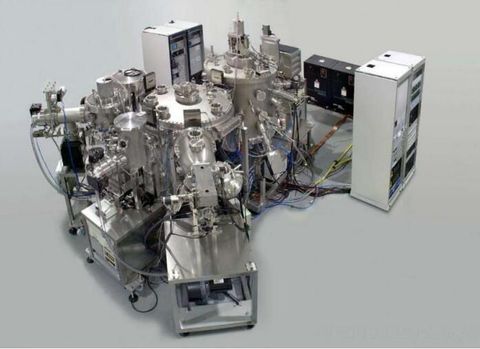
A pharmaceutical wet granulator may be integrated with dryers, mills, screens, transfer systems, and tablet manufacturing equipment. This creates a broader wet granulation system rather than treating the granulator as an isolated machine.
Common equipment types
A high shear granulator is designed for intensive mixing and granule formation. Other configurations may be used for laboratory development, pilot-scale work, batch production, or industrial processing.
A laboratory wet granulator generally handles smaller quantities and is useful during formulation development and process evaluation. An industrial wet granulator is designed for larger processing volumes and may be connected to automated material handling and downstream equipment.
| Equipment type | Typical role | Main consideration |
|---|---|---|
| Laboratory wet granulator | Formulation and process development | Small batch control |
| High shear granulator | Intensive mixing and granulation | Mixing and shear conditions |
| Industrial wet granulator | Larger-scale production | Capacity and process consistency |
| GMP wet granulator | Regulated pharmaceutical production | Cleaning, documentation, and qualification |
| Continuous wet granulation system | Continuous processing | Stable material flow and process control |
Importance
Wet granulation matters because many powders do not naturally have the flow, density, or compressibility required for consistent downstream processing. Granulation can change these physical properties by creating larger and more structured particles.
In tablet production, controlled granules can help powders move through processing equipment more predictably. Granules may also provide more consistent feeding into tablet presses, although the actual result depends on formulation, equipment settings, moisture content, and other process conditions.
Where wet granulation is used
Pharmaceutical granulation equipment is widely associated with solid oral dosage manufacturing. A pharmaceutical granulation machine may form part of a larger production line that includes powder handling, drying, milling, blending, compression, and coating.
The process can also be relevant to chemical and other powder-processing applications. However, equipment configuration must match the material because different powders respond differently to moisture, shear, temperature, and mixing time.
Why maintenance affects efficiency
Maintenance is important because worn components or poorly adjusted equipment can influence granule quality and process consistency. A damaged impeller, cutter, seal, sensor, or drive component may change how material moves inside the processing chamber.
Routine maintenance commonly includes:
- Inspecting moving components for wear.
- Checking seals and gaskets for damage.
- Examining mixing blades and cutters.
- Verifying sensor operation.
- Checking drive systems and connections.
- Inspecting discharge mechanisms.
- Cleaning product-contact areas according to established procedures.
- Recording maintenance activities and equipment status.
For pharmaceutical processing equipment, maintenance also has a quality-control role. FDA guidance explains that equipment used for drug manufacturing must be appropriately designed for its intended use and for cleaning and maintenance, while product-contact surfaces should not adversely affect product quality.
Operating factors that influence results
Operation of a wet granulator requires control of several variables. Liquid addition rate, mixing time, impeller speed, cutter speed, powder properties, binder characteristics, and moisture level can all affect granule formation.
Too little liquid may produce weak or poorly developed granules, while excessive liquid can create large, dense masses that are difficult to process. Similarly, excessive mechanical energy can alter particle structure or produce unwanted temperature increases.
For this reason, pharmaceutical granulation systems generally rely on defined operating ranges and documented process controls rather than a single setting that applies to every formulation.
Recent Updates
From 2024 through 2026, pharmaceutical manufacturing has continued moving toward greater automation, process monitoring, data collection, and continuous processing. These developments are influencing the design of modern pharmaceutical wet granulation machine configurations.
Automation and process monitoring
Automated granulation systems can integrate sensors, control software, material handling, and equipment status information. The objective is to provide more consistent control of process variables and reduce dependence on manual adjustments.
Process Analytical Technology, commonly known as PAT, is another important area. PAT approaches use measurements and process information to support understanding and control during manufacturing rather than relying only on testing after production. FDA continues to identify PAT, continuous manufacturing, and other advanced technologies as areas of pharmaceutical manufacturing development.
Continuous wet granulation
Continuous wet granulation is receiving attention as part of broader continuous manufacturing development. Unlike traditional batch processing, continuous systems feed materials through connected processing stages with ongoing input and output.
ICH Q13 provides regulatory and scientific considerations for continuous manufacturing of drug substances and drug products. FDA describes the guidance as covering development, implementation, operation, and lifecycle management of continuous manufacturing systems.
Advanced control systems
Current pharmaceutical process automation increasingly connects equipment sensors with centralized monitoring and control systems. Data may be used to track variables such as temperature, torque, moisture, mixing conditions, and material flow.
This trend also affects industrial granulation equipment. High performance granulation equipment increasingly focuses on measurable process conditions, repeatable control, equipment status monitoring, and integration with other pharmaceutical manufacturing equipment.
Laws or Policies
For the United States, pharmaceutical wet granulation processes are affected by the FDA's Current Good Manufacturing Practice framework. Drug manufacturing requirements are established under federal regulations, including 21 CFR Parts 210 and 211. Part 211 covers current good manufacturing practice requirements for finished pharmaceuticals.
Equipment requirements
CGMP requirements do not identify one particular wet granulator manufacturer or approve a specific machine design. Instead, manufacturers are responsible for selecting equipment that is appropriate for its intended use and capable of supporting applicable manufacturing requirements.
FDA explains that equipment should be designed to facilitate operations, cleaning, and maintenance. Product-contact surfaces should also avoid interactions that could alter a drug product's safety, identity, strength, quality, or purity.
Cleaning and documentation
Cleaning procedures, maintenance records, calibration where applicable, and equipment status records are important parts of regulated manufacturing. Equipment used for different materials may require controls that help prevent contamination or material carryover.
For organizations evaluating GMP granulation equipment, these requirements can influence equipment materials, accessibility, cleaning procedures, documentation, and validation activities. A stainless steel wet granulator may be selected for particular applications because its construction can be compatible with established cleaning and product-contact requirements, but the suitability of a specific design must be evaluated for its intended process.
In recent regulatory developments, FDA has also continued work around advanced manufacturing. A final Advanced Manufacturing Technologies Designation Program guidance provides a framework for technologies that meet its designation criteria, while newer regulatory initiatives continue examining advanced manufacturing approaches.
Tools and Resources
Several resources can help readers understand wet granulation equipment and related manufacturing processes.
Equipment documentation
An equipment manual normally provides information about operating procedures, component identification, cleaning instructions, inspection points, and routine maintenance. For a wet granulation equipment manufacturer or pharmaceutical equipment manufacturer, technical documentation is an important part of equipment evaluation and controlled operation.
Process records
Batch records, cleaning logs, maintenance logs, calibration records, and equipment inspection checklists can help organize production information. These documents also support traceability in regulated pharmaceutical environments.
Measurement tools
Depending on the process, useful measurement systems may include:
- Moisture measurement instruments.
- Temperature sensors.
- Torque monitoring.
- Weight and load measurement.
- Particle-size analysis.
- Pressure monitoring.
- Equipment vibration monitoring.
These tools can support evaluation of granule properties and equipment performance.
Regulatory resources
FDA's CGMP resources explain requirements related to equipment, production controls, documentation, and pharmaceutical manufacturing. FDA also maintains information about continuous manufacturing and advanced manufacturing technologies.
FAQs
What is a wet granulator?
A wet granulator is equipment that mixes powders with a liquid binder and mechanical energy to form larger, cohesive granules. The resulting material can then undergo drying and sizing before further processing.
How does a high shear wet granulator work?
A high shear wet granulator uses mechanical mixing and cutting action to distribute powder and liquid and encourage particle agglomeration. Operating conditions such as mixing intensity, liquid addition, and processing time influence the resulting granules.
What is a pharmaceutical wet granulation machine used for?
A pharmaceutical wet granulation machine is commonly used to convert powder mixtures into granules for subsequent processing, including tablet manufacture. The exact process depends on the formulation and established manufacturing controls.
What maintenance does a wet granulator machine require?
Maintenance commonly involves inspection and cleaning of product-contact parts, examination of blades and seals, checking drive components, verifying sensors, and documenting maintenance activities. Specific procedures depend on the equipment design and manufacturing environment.
What is continuous wet granulation?
Continuous wet granulation is a process in which powder and liquid materials are continuously introduced into a granulation process while processed material exits the system. It differs from conventional batch granulation and is part of the broader development of continuous pharmaceutical manufacturing.
Conclusion
A wet granulator combines powders, liquid binders, and controlled mechanical action to produce granules with properties suitable for further processing. Effective operation depends on variables such as moisture, mixing intensity, processing time, equipment condition, and material characteristics. Recent developments have increased attention to automation, process monitoring, and continuous wet granulation systems. In the United States, pharmaceutical applications are shaped by FDA CGMP requirements covering equipment design, cleaning, maintenance, process control, and documentation.