Tunnel Survey Equipment Overview: Key Features, Functions, and Uses
Tunnel survey equipment plays an important role in the planning, construction, and maintenance of underground infrastructure.
These tools are used to measure distances, angles, elevations, and positions inside tunnels where traditional surface surveying methods may not be suitable. Tunnel surveying instruments help engineers and construction teams maintain accurate tunnel alignment and ensure that underground structures follow planned routes.
The development of tunnel measurement equipment is closely linked to advances in engineering and geospatial technologies. Early tunnel projects relied heavily on manual measurements and basic optical tools. Over time, modern geospatial survey equipment, laser systems, and digital mapping technologies have improved the accuracy and efficiency of underground surveying activities.
Today, tunnel construction surveying is used in transportation networks, utility corridors, mining operations, water management systems, and other infrastructure projects. Tunnel mapping technology supports the collection of detailed spatial information, helping teams understand underground conditions and monitor construction progress.
Common Types of Tunnel Survey Equipment
Several types of underground survey equipment are commonly used throughout different stages of tunnel projects:
- Total stations for measuring angles and distances with high precision.
- Laser tunnel surveying systems for alignment checks and positioning.
- GNSS-linked surveying tools for connecting surface and underground data.
- Digital levels for elevation measurements.
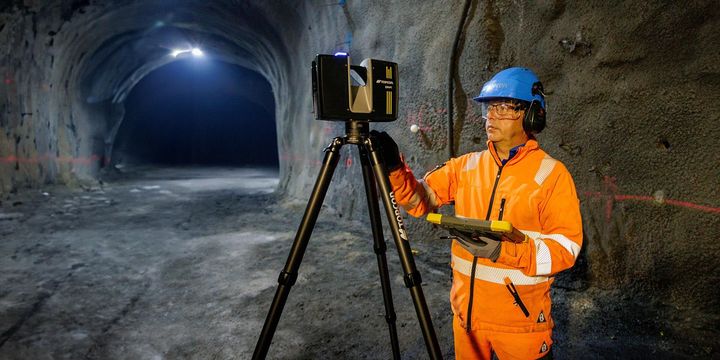
- 3D laser scanners for capturing tunnel geometry.
- Underground mapping equipment for creating digital models and maps.
- Tunnel alignment survey tools used to verify route accuracy during excavation.
Each type of equipment contributes to different surveying tasks, depending on project requirements and environmental conditions.
Importance
Tunnel construction projects require precise measurements because even small positioning errors can become significant over long distances. Tunnel survey equipment helps maintain accuracy throughout the construction process.
Supporting Safe Infrastructure Development
Accurate surveying allows construction teams to understand tunnel geometry and geological conditions. This information supports planning decisions and helps reduce the likelihood of alignment issues during excavation.
Improving Project Coordination
Infrastructure projects often involve engineers, planners, geologists, and construction personnel. Geospatial survey equipment creates a common reference system that allows different teams to work from the same measurements and maps.
Monitoring Construction Progress
Tunnel measurement equipment is frequently used to compare actual construction progress with design specifications. This monitoring process helps identify deviations and supports corrective actions when necessary.
Assisting Maintenance and Inspection
Surveying does not end after construction. Tunnel mapping technology can also support inspections and maintenance activities. Digital records help operators monitor structural conditions and compare changes over time.
Applications Across Different Industries
Tunnel surveying instruments are used in many sectors, including:
| Industry Sector | Common Tunnel Surveying Purpose |
|---|---|
| Transportation | Railway and roadway tunnels |
| Water Management | Water conveyance tunnels |
| Energy | Hydropower and utility tunnels |
| Mining | Underground excavation mapping |
| Urban Development | Metro and underground transit systems |
| Utilities | Cable and pipeline corridors |
These applications demonstrate the broad importance of underground construction surveying in modern infrastructure development.
Recent Updates
The field of tunnel survey equipment continues to evolve as digital technologies become more widely integrated into construction workflows.
Growth of 3D Scanning Technologies
Many projects now use advanced laser scanning systems to create highly detailed digital representations of tunnel interiors. These systems can collect large amounts of spatial data within relatively short periods.
Increased Use of Digital Twins
Tunnel mapping technology increasingly supports digital twin environments. A digital twin is a virtual representation of a physical structure that can be updated using survey data collected throughout construction and operation.
Integration with Building Information Modeling
Surveying data is increasingly connected with Building Information Modeling (BIM) platforms. This integration helps project teams visualize underground structures and coordinate construction activities more effectively.
Automation and Remote Data Collection
Some tunnel surveying instruments now include automated measurement capabilities. Remote operation features can help gather data in areas where access may be limited or conditions may change frequently.
Enhanced Data Processing Software
Modern infrastructure surveying solutions often include software that can process survey information, generate maps, and create three-dimensional models. These tools support faster analysis and more detailed reporting.
Improved Sensor Technologies
Advancements in sensors have increased the accuracy of underground survey equipment. Modern systems can capture positional information and structural measurements with greater consistency across complex environments.
Laws or Policies
Tunnel construction surveying is generally influenced by engineering standards, workplace safety requirements, and infrastructure regulations. Specific requirements vary between countries and project types.
Engineering and Construction Standards
Many governments and infrastructure agencies establish technical standards for surveying activities. These standards define acceptable measurement procedures, documentation practices, and quality requirements.
Occupational Safety Requirements
Underground construction environments often involve specific safety regulations. Surveying teams may need to follow safety protocols related to ventilation, access control, emergency preparedness, and equipment operation.
Environmental Compliance
Some tunnel projects require environmental assessments before construction begins. Surveying information can support environmental planning by providing accurate spatial data about project locations and surrounding conditions.
Infrastructure Approval Processes
Large infrastructure projects typically undergo review and approval procedures. Survey data often forms part of the documentation used during planning, design verification, and construction monitoring.
Data Management Guidelines
As digital surveying becomes more common, some organizations have introduced standards for data storage, recordkeeping, and information sharing. These guidelines help maintain consistency throughout project lifecycles.
Because regulations vary by location and project category, organizations usually follow the requirements established by relevant government agencies and engineering authorities.
Tools and Resources
A variety of tools and resources support tunnel surveying activities and underground mapping processes.
Surveying Software Platforms
Common software categories include:
- Geographic Information System (GIS) platforms.
- CAD-based engineering software.
- Point cloud processing applications.
- 3D modeling programs.
- Construction data management systems.
These tools help organize, analyze, and visualize survey information.
Mapping and Visualization Resources
Modern tunnel mapping technology often uses visualization tools that transform survey measurements into maps, cross-sections, and three-dimensional models. These outputs support planning and communication among project teams.
Data Processing Utilities
Surveying workflows frequently involve:
- Coordinate conversion tools.
- Elevation analysis applications.
- Alignment verification utilities.
- Geospatial data processing software.
- Reporting and documentation systems.
Training and Professional Resources
Engineering organizations, infrastructure agencies, and academic institutions often provide educational materials related to tunnel construction surveying. These resources help professionals stay informed about evolving technologies and methodologies.
Monitoring Technologies
Many projects combine tunnel survey equipment with monitoring systems that track structural movement, settlement, and deformation. These technologies contribute to ongoing infrastructure assessment and maintenance programs.
FAQs
What is tunnel survey equipment used for?
Tunnel survey equipment is used to measure positions, distances, elevations, and alignments within underground construction projects. These measurements help support planning, excavation, construction monitoring, and maintenance activities.
Which tunnel surveying instruments are commonly used in construction?
Common tunnel surveying instruments include total stations, digital levels, laser tunnel surveying systems, 3D laser scanners, and underground mapping equipment. The choice of instrument depends on project requirements and site conditions.
How does tunnel mapping technology improve construction projects?
Tunnel mapping technology creates detailed digital representations of underground spaces. These maps and models help project teams understand tunnel geometry, monitor progress, and maintain alignment accuracy.
What is the difference between surface surveying and underground survey equipment?
Surface surveying typically relies on open-sky positioning methods and visible reference points. Underground survey equipment is designed to operate in enclosed environments where visibility and satellite signals may be limited.
Why are tunnel alignment survey tools important?
Tunnel alignment survey tools help ensure that excavation follows the intended route. Accurate alignment is important because small measurement errors can accumulate over long distances and affect construction outcomes.
Conclusion
Tunnel survey equipment provides the measurements and spatial data needed for underground infrastructure projects. Modern tunnel surveying instruments support planning, construction monitoring, mapping, and long-term maintenance activities. Advances in laser scanning, digital modeling, and geospatial survey equipment continue to improve data collection and analysis capabilities. As infrastructure development expands, tunnel mapping technology remains an important component of underground construction surveying and project management.